Bundle
Arsenal FC
All dates in this series
0 events
Authentic ticketsOfficial resaleSecure payment24/7 Support
About the event
Arsenal FC is a club whose history shows that football is about much more than winning trophies. It is about emotions, great personalities, painful defeats and moments that remain in the memories of supporters forever. From the legendary teams managed by George Graham, through Arsène Wenger’s Invincibles, to the side being built by Mikel Arteta, the Gunners have continued to fight for their place among football’s elite.
Founded in 1886, the club has become one of the most recognisable names in English football. Over the decades, Arsenal has attracted and developed many outstanding players, but one of the most important chapters in its history came during the 2003/04 season, when the team achieved something that continues to inspire admiration today.
At the heart of that success was Arsène Wenger, who created a side combining technical ability, speed, physical strength and exceptional football intelligence. Thierry Henry could decide matches almost single-handedly, Dennis Bergkamp amazed fans with his imagination, Patrick Vieira gave the team its character, and Robert Pires brought elegance and precision to the attack. Sol Campbell and Kolo Touré, meanwhile, were important pillars of the defence.
It all began on 7 May 2003, when Arsenal defeated Southampton 6–1 at Highbury. The match came after a disappointing end to their title challenge, with Manchester United finishing as champions. Nobody could have imagined that this victory would mark the beginning of one of the most extraordinary runs in Premier League history.
Arsenal subsequently went 49 consecutive league matches without defeat. Their record during this run was 36 wins and 13 draws. In the 2003/04 season, the team finished the league campaign with 26 victories and 12 draws, losing not a single match. This was how the nickname “The Invincibles” was born.
There were moments when the record came close to being broken. In September 2003, Arsenal faced Manchester United at Old Trafford. Late in the game, Ruud van Nistelrooy missed a penalty, striking the crossbar. The London side escaped with a goalless draw, allowing their supporters to breathe a sigh of relief. That moment became one of the most memorable episodes of the entire run.
Wenger’s team could win at the most difficult grounds, including Anfield and Stamford Bridge. One match that holds a special place in history took place against Liverpool in April 2004. Arsenal were trailing 2–1 at half-time but eventually won 4–2, with Thierry Henry scoring a hat-trick. It was a demonstration not only of technical quality but also of the team’s mental resilience. The Gunners had no intention of giving up their title challenge.
On 25 April 2004, Arsenal secured the championship after drawing 2–2 with Tottenham at White Hart Lane. Winning the title at the home of their local rivals made the achievement even more meaningful. The season ended without a single defeat, and the team entered the history books as one of the most remarkable sides of its era.
However, Arsenal’s history is not just about Wenger and his Invincibles. Before him, George Graham played an important role in the club’s success during the late 1980s and early 1990s. In the 1991/92 season, Arsenal began the campaign as defending champions, with players such as Alan Smith, Paul Merson and Kevin Campbell in their squad.
Liam Brady was another important figure associated with the club, admired for his playing ability and later managerial career. After leaving Arsenal, he managed Brighton & Hove Albion. When the club faced serious financial difficulties, Brady became involved in efforts to help it survive. In 1996, he offered £40,000 of his own money to support an agreement that allowed Brighton to remain at the Goldstone Ground for another season. His story is a reminder that a connection with a football club does not necessarily end with the final whistle of a playing or managerial career.
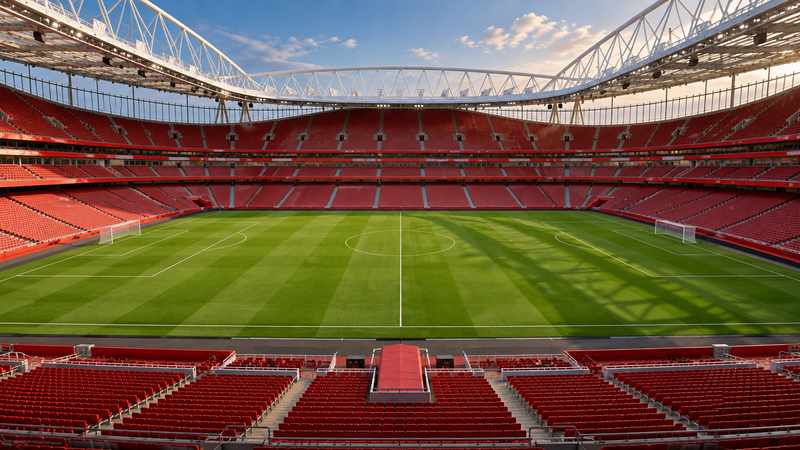
In 2006, Arsenal left the historic Highbury Stadium and moved to the Emirates Stadium. The move symbolised a new phase of development, but it did not mean an end to sporting challenges. The club had to adapt to an increasingly competitive Premier League, and following Wenger’s departure, Arsenal began another period of rebuilding.
Mikel Arteta focused on tactical organisation, intensity and the development of young players. Bukayo Saka became one of the most important figures in the new team, growing into a leader in attack. Arsenal gradually re-established itself among England’s leading sides, and competing at the highest level of European football once again became a central part of the club’s ambitions.
A notable moment came with the 3–0 victory over Lille in the Champions League on 13 October 2026. Arsenal settled the match after half-time, scoring three goals within seven minutes. Jurrien Timber, Eberechi Eze and Bukayo Saka were all on the scoresheet. Noni Madueke also featured, making his 50th appearance for the London club.
The match also carried emotional significance. The team paid tribute to Ken Friar, Arsenal’s long-serving official and honorary president, who had recently passed away. The players wore black armbands, and the victory was dedicated to his memory. Olivier Giroud, the former Arsenal striker who scored more than 100 goals for the club, also appeared on the pitch.
Arsenal remains a club whose past sets high standards, but those achievements do not relieve its current players of the responsibility to create their own history. The Invincibles remain a benchmark for future generations, although modern football presents the team with very different challenges. Increasing competition, pressure to deliver results and ever-higher tactical demands mean that returning to the top requires patience and consistency.
Arsenal’s strength lies in its combination of a rich tradition and the ambition to keep developing. It is the club of Thierry Henry and Dennis Bergkamp, Patrick Vieira and Robert Pires, but also of Bukayo Saka and a new generation of players determined to write their own names into its history.
Arsenal’s greatness is not defined solely by what it achieved in the past. It also lies in the fact that, despite the passing of time, generation after generation of supporters continue to believe that more unforgettable moments may still lie ahead.